Top 5 Largest U.S. Military Bases Worldwide

The DoD's Base Structure Report identifies approximately 545 installations in roughly 45 countries, not including classified sites, expeditionary locations, or small training missions embedded on host nation bases. When people ask about the "largest" U.S. military base, the answer depends on what you're measuring. Population and land area tell different stories, and the biggest installations by either measure are worth understanding on their own terms.
This updated guide covers the five largest U.S. military installations by total supported population and the five largest by land area, with current unit assignments and accurate base names as of spring 2026.
Largest U.S. Military Bases by Population
1. Fort Bragg, North Carolina
Fort Bragg stands as the largest military installation by total supported population. Home to approximately 260,000 people, the installation near Fayetteville, North Carolina, is the Army's most significant power-projection hub. It serves as headquarters for XVIII Airborne Corps and the 82nd Airborne Division, and houses U.S. Army Special Operations Command (USASOC), making it the center of gravity for both conventional airborne and special operations forces.
Which Military Branch Is Right for You?
Answer 10 questions to discover which branch of the U.S. Armed Forces best matches your personality, interests, and goals.
10 questions · ~2 min
XVIII Airborne Corps Headquarters at Fort Bragg oversees four divisions spanning multiple installations: the 82nd Airborne Division at Fort Bragg, the 101st Airborne Division (Air Assault) at Fort Campbell, the 10th Mountain Division at Fort Drum, and the 3rd Infantry Division at Fort Stewart, along with corps-level enablers based at Bragg itself.
Those include the 18th Field Artillery Brigade, the 20th Engineer Brigade, the 35th Signal Brigade, the 44th Medical Brigade, and the 3rd Expeditionary Sustainment Command. As “America's Contingency Corps,” XVIII Airborne Corps is designed to deploy anywhere in the world on short notice by air, land, or sea. The installation has been continuously active since 1918 and covers 163,000 acres.

2. Fort Hood, Texas
Fort Hood, the second-largest military installation in the world by population, sits on 218,000 acres near Killeen in Central Texas, straddling Bell and Coryell Counties. It supports a military community estimated at 200,000 to 250,000 people when active-duty soldiers, family members, civilians, and retirees are counted together.
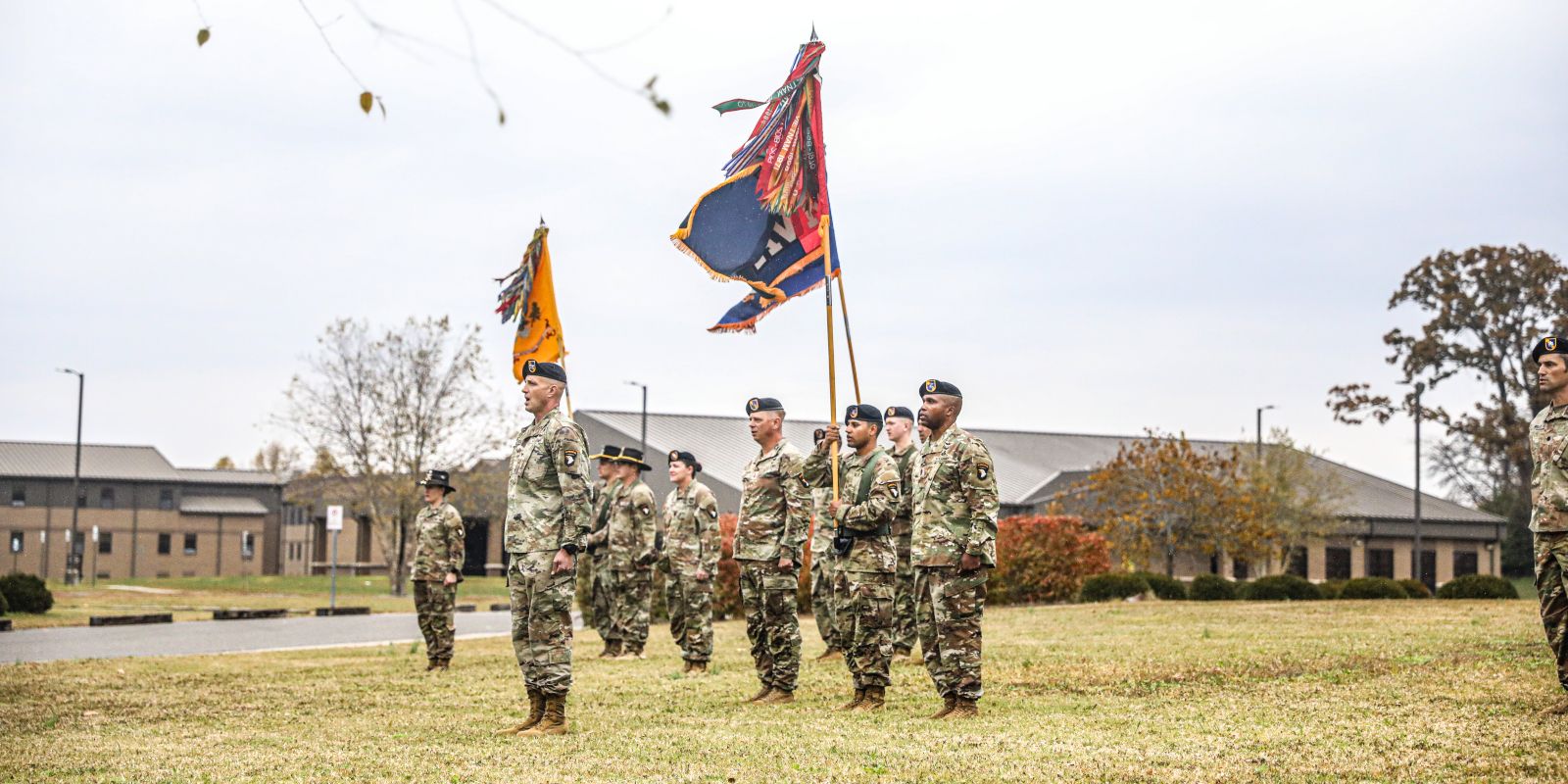
III Corps Headquarters at Fort Hood oversees four divisions spanning four states: the 1st Cavalry Division at Fort Hood, the 1st Armored Division at Fort Bliss, the 4th Infantry Division at Fort Carson, and the 1st Infantry Division at Fort Riley, along with a robust set of corps-level enablers based at Fort Hood itself.
Those include the 3rd Cavalry Regiment, the 13th Armored Corps Sustainment Command, the 36th Engineer Brigade, the 504th Expeditionary Military Intelligence Brigade, the 89th Military Police Brigade, the 11th Corps Signal Brigade, and the 1st Medical Brigade. The 75th Field Artillery Brigade, also under III Corps, is stationed at Fort Sill, Oklahoma. Together, III Corps represents approximately 40 percent of the Army's total combat power.
3. Fort Campbell, Kentucky/Tennessee
Straddling the state line between Kentucky and Tennessee, Fort Campbell supports approximately 250,000 people. It is home to the 101st Airborne Division (Air Assault), the "Screaming Eagles." Fort Campbell also supports a powerful collection of tenant units that make it one of the most operationally diverse installations in the Army.
The 160th Special Operations Aviation Regiment, known as the Night Stalkers, provides the special operations aviation capability that has supported virtually every major U.S. combat operation since Grenada in 1983.
The 5th Special Forces Group adds a direct-action and unconventional warfare capability, while the 52nd Ordnance Group (EOD) and the 902nd Military Intelligence Group round out the installation's combined-arms depth. The Sabalauski Air Assault School, the Army's premier air assault training program, is also headquartered at Campbell.

4. Joint Base Lewis-McChord, Washington
Created in 2010 through the merger of Fort Lewis and McChord Air Force Base, Joint Base Lewis-McChord is an Army-led joint installation. Fort Lewis was named for Captain Meriwether Lewis of the Lewis and Clark Expedition, and McChord Field honors Colonel William Caldwell McChord, an Army Air Corps aviator killed in a 1937 crash. JBLM supports approximately 250,000 personnel across its facilities and covers roughly 647 square miles, including the Yakima Training Center.
Loading calculator...
The installation serves as headquarters for I Corps, the Army's only power projection corps west of the Rocky Mountains. Major units include the 2nd Infantry Division, the 1st Special Forces Group (Airborne), the 593rd Expeditionary Sustainment Command, the 555th Engineer Brigade, and the 62nd Airlift Wing on the Air Force side.
5. Naval Station Norfolk, Virginia
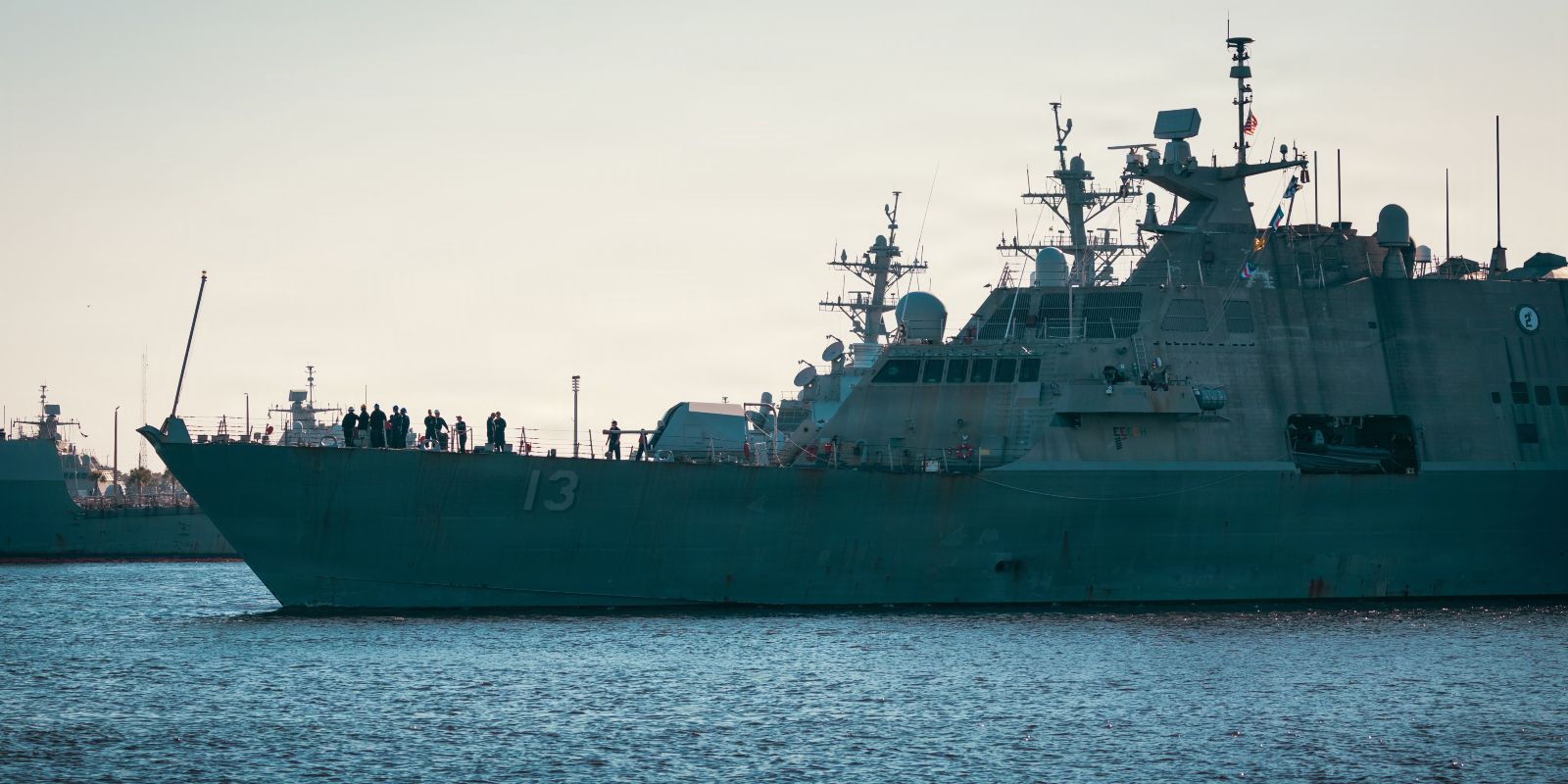
No list of population giants is complete without the world's largest naval base. Occupying about 3,400 acres in the Sewells Point area of Norfolk, Virginia, Naval Station Norfolk supports an operational population of roughly 46,000 active-duty military personnel, 20,000 civilians, and tens of thousands of family members and local retirees.
The base houses the highest concentration of U.S. Navy forces anywhere in the world, serving as the homeport for four carrier strike groups, plus dozens of cruisers, destroyers, submarines, and aircraft squadrons. As the headquarters for U.S. Fleet Forces Command, Norfolk is the undeniable center of gravity for the Navy's Atlantic operations.
Largest U.S. Military Bases by Land Area

1. Nellis Air Force Range, Nevada
Nellis Air Force Base takes its name from First Lieutenant William Harrell Nellis, a Nevada-born P-47 Thunderbolt pilot. At roughly 4,531 square miles of restricted airspace and land, Nellis and the Nevada Test and Training Range together constitute the largest military training area in the United States.
The host unit is the 99th Air Base Wing, which provides installation support for the base and the 2.9-million-acre Nevada Test and Training Range. Major units include the 57th Wing, home to the USAF Weapons School.

2. White Sands Missile Range, New Mexico
Spanning approximately 3,200 square miles in the Tularosa Basin of southern New Mexico, White Sands Missile Range takes its name from one of the most striking natural features in North America.
Established as White Sands Proving Ground in July 1945, the range witnessed the detonation of the world's first atomic bomb at the Trinity Site. Today, WSMR supports more than 3,000 tests annually for the Army, Navy, Air Force, and commercial and international partners.
3. Barry M. Goldwater Range, Arizona
The Barry M. Goldwater Range covers 2,500 square miles of the Sonoran Desert in southwestern Arizona, shared by the Air Force and Marine Corps. The range trains approximately 95 percent of fighter pilots who deploy to combat operations, making it one of the most consequential pieces of real estate in American military aviation.
The Goldwater Range also encompasses roughly 42 percent of the remaining U.S. habitat for the endangered Sonoran pronghorn.

4. Fort Bliss, Texas/New Mexico
Covering 1,875 square miles across Texas and New Mexico—an area larger than the state of Rhode Island—Fort Bliss has been a fixture of the American Southwest since 1848.
The installation is home to the 1st Armored Division, but its deeper identity is as the Army's air and missile defense center of gravity. Fort Bliss made national headlines in early 2026 when counter-drone laser systems operating in the area caused significant airspace disruptions with CBP personnel, underscoring the growing urgency of counter-drone operations along the southern border.
5. Naval Air Weapons Station (NAWS) China Lake, California
Securing the number five spot is the Navy's largest single landholding. Located in the western Mojave Desert of California, NAWS China Lake encompasses an astounding 1.1 million acres (over 1,700 square miles) of land.
To put that in perspective, China Lake represents 85 percent of the Navy’s total land for weapons and armaments research, development, acquisition, testing, and evaluation (RDAT&E) and 38 percent of the Navy’s land holdings globally.
The airspace above it covers over 17,000 square miles of restricted and controlled space, jointly utilized with nearby Edwards Air Force Base and Fort Irwin.
Why Size Matters
America's largest military installations aren't just big for the sake of being big. Each reflects a specific strategic logic—armored maneuver at Fort Hood, airborne and special operations at Fort Bragg, air combat training at Nellis, missile development at White Sands, fleet projection at Norfolk, and power projection toward the Pacific at JBLM.
Understanding what these bases do, not just how large they are, is a better measure of American military capacity. These installations continue to evolve as strategic priorities shift—and as the naming decisions of recent years remind us, even their identities are not always settled questions.
Continue Reading
The Top 10 Largest Army Bases in the United States, Ranked
Information
The Largest Navy Bases in the World: Ranked by Land Area, Population, and Strategic Impact
Information
Where Are the Largest Space Force Bases? Your Guide to the Top Installations
Information
Join the Conversation

BY MICKEY ADDISON
Military Affairs Analyst at VeteranLife
Air Force Veteran
Mickey Addison is a retired U.S. Air Force colonel and former defense consultant with over 30 years of experience leading operational, engineering, and joint organizations. After military service, he advised senior Department of Defense leaders on strategy, readiness, and infrastructure. In additi...
Credentials
Expertise
Mickey Addison is a retired U.S. Air Force colonel and former defense consultant with over 30 years of experience leading operational, engineering, and joint organizations. After military service, he advised senior Department of Defense leaders on strategy, readiness, and infrastructure. In additi...