Happy National Crayon Day: Facts, History, and Why Marines Love It

As a branch of America’s Armed Forces, the US Marine Corps celebrates certain holidays, those most closely associated with our nation’s identity, with particular gusto. Independence Day. Memorial Day. Veterans Day. Black Friday. May the Fourth. International Talk Like a Pirate Day.
And then there are those holidays of particular significance to us Devil Dogs. The Marine Corps Birthday. The anniversary of our reserve component’s formation. John Glenn becoming the first American to orbit Earth. The day George C. Scott became the first Marine Veteran to decline an Academy Award. Every single Taco Tuesday anywhere, ever.
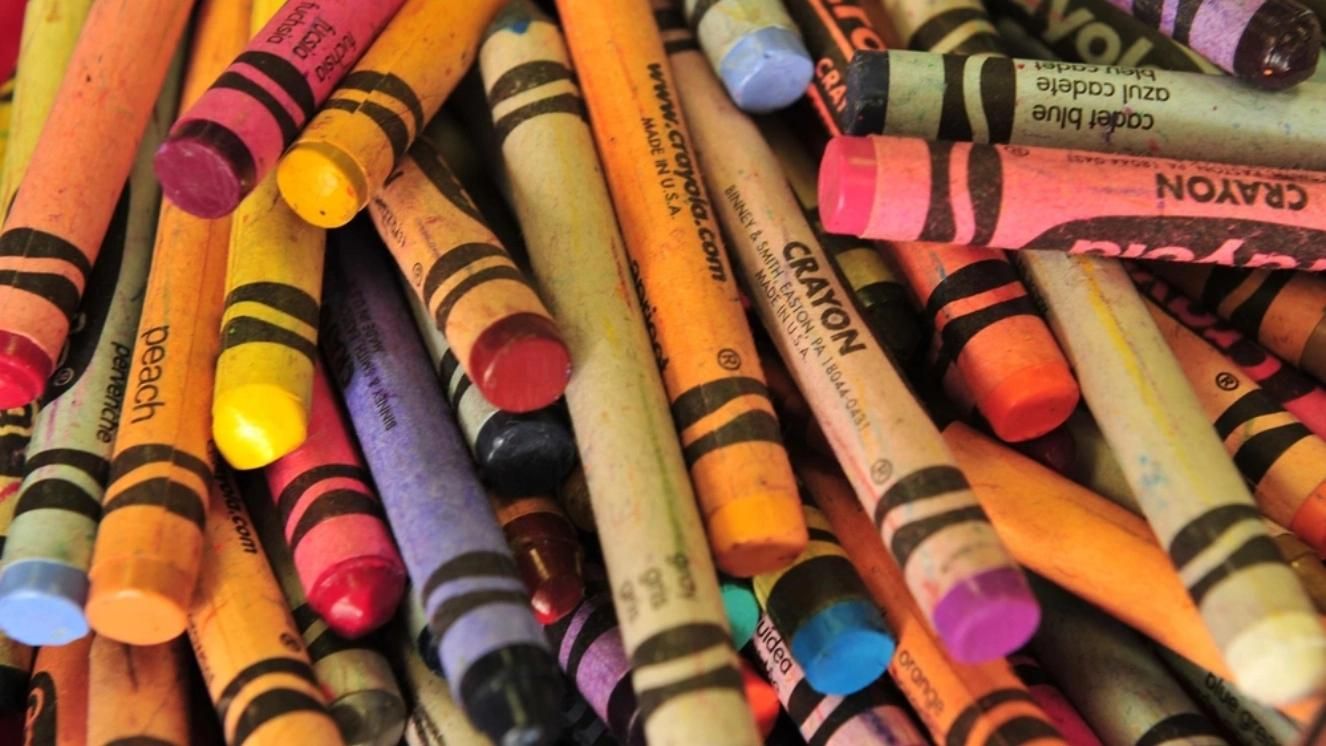
And, like all those occasions, tomorrow marks another such date of special, celebratory significance to Leathernecks young and old. One that’s likely to fill the heart of any Marine, be they active duty, a reservist, or a crusty old Veteran like this writer, with glee. Not to mention make their mouths water. Because March 31st is the day we as a country celebrate the world’s most delicious treats/coloring tools. That’s right, my fellow Jarheads, it’s National Crayon Day.

The Origins of the Crayon
While the modern concept of the crayon is over a century old, the origin of those scrumptious sketching tools dates back much further. The earliest known examples of what can be considered crayons, drawing implements made of pigment mixed with beeswax, date back to Ancient Egypt and Greece.
Pastel drawing crayons, even more similar to their current, everyday equivalents, first emerged in Italy in the 16th century. Since then, countless great artists, such as Edgar Degas and Mary Cassatt, have used them and their later iterations to create spectacular works.
But despite this long and impressive history, the modern concept of what most people think of when it comes to crayons traces its beginnings to two businessmen and a chemical company at the turn of the 20th century.
Crayola and the History of Modern Crayons
In 1885, a young man named Edward Binney took over his family’s business, the Peekskill Chemical Works, from his retiring father. After appointing his fellow employee and cousin C. Harold Smith to run the company with him, they aptly renamed it to Binney & Smith, Inc.
They continued to produce many of the same products they always had, primarily components used in paints, shoe polish, typewriter ribbons, and more. But they also expanded their portfolio by moving into the education tools market, first by manufacturing slate pencils and then inventing a type of dustless chalk for classrooms.
But it was in 1903 that the pair introduced the world to their most celebrated product. As the company’s sales to those working in education grew, its employees noticed a particular problem in many of the classrooms they visited. While high-quality wax crayons were available to professional artists willing to pay for them, the cheap versions available in most classrooms were of exceedingly poor quality.
Thus, Binney and Smith decided to mass-produce crayons that would allow schoolchildren to create beautiful, colorful art at a reasonable price. And in June of 1903, the company introduced its first box of crayons: a set of eight (red, orange, yellow, green, blue, violet, brown, and black). Each box cost a nickel. And they gave their new product a name suggested by Binney’s wife, Alice, a schoolteacher herself, inspired by their look and feel. A combination of the French words for “chalk” (craie) and “oily” (ola): Crayola. Thus, the modern crayon, and the brand name all but synonymous with it, was born.

Crayons and the Marine Corps
So, how did these delightful artists' tools for children of all ages become associated with the USMC? From whence the (mostly sarcastic) trope of the “crayon-eating Marine?” As with so many jokes about the Corps, it stems from the stereotype that all members of the branch are, to put it mildly, knuckle-dragging lunkheads who can’t read a pop-up book introducing a first grader to the ABCs without sounding out the words.
Its exact origins, however, are unclear. But sometime in the mid-20-teens, jokes and memes about Marines gobbling up crayons became a regular staple in the world of military humor. The Marine Corps Times has suggested speculative flavors that would particularly appeal to its readers (this writer would enjoy five out of eight of them, but understands why other Marines would enjoy the other three). The joke is so widespread and universally understood that even weapons manufacturers based in other countries can successfully crack it.
Now, some non-Marines out there might wonder how those of us who served in the Corps might feel about all this mockery of us as the sort of grown men and women who enjoy the taste of chemically dyed, industrially produced wax. And while I certainly can’t speak for all those who either currently wear or formerly wore the uniforms of our service, I, for one, love it. I find it hilarious. After all, it’s based on an over-the-top, intentionally absurd caricature of our branch of the military that has no basis in reality.
Now, if you’ll excuse me, I need to run out to my nearest art supply store to pick up a quick lunch.
Join the Conversation

BY PAUL MOONEY
Veteran & Military Affairs Correspondent at VeteranLife
Marine Veteran
Paul D. Mooney is an award-winning writer, filmmaker, and former Marine Corps officer (2008–2012). He brings a unique perspective to military reporting, combining firsthand service experience with expertise in storytelling and communications. With degrees from Boston University, Sarah Lawrence Coll...
Credentials
Expertise
Paul D. Mooney is an award-winning writer, filmmaker, and former Marine Corps officer (2008–2012). He brings a unique perspective to military reporting, combining firsthand service experience with expertise in storytelling and communications. With degrees from Boston University, Sarah Lawrence Coll...