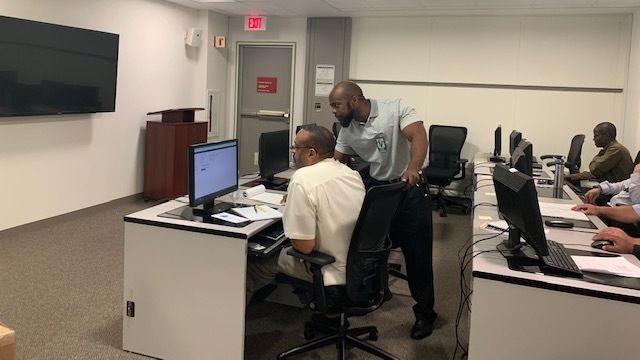
7 Federal Cybersecurity Jobs Veterans Can Apply for Right Now, As the Pentagon Scrambles to Fill 20,000 Roles

If you’re a Veteran with a security clearance or technical background, the federal government may already be hiring for skills you have. The Pentagon is currently short more than 20,000 cybersecurity professionals, and agencies across government are working to close that gap. The challenge isn’t just a hiring issue. It’s a national security issue.
A recent Government Accountability Office review found that federal agencies continue to struggle to recruit and retain qualified cybersecurity personnel, making critical systems harder to defend and cyber teams spread thin.
Cybersecurity has quietly become one of the federal government’s most urgent hiring priorities. Across the government, agencies are recruiting for a wide range of cyber roles, many listed under the 2210 Information Technology Specialist job series, one of the most common entry points into cybersecurity careers in the federal workforce.
For Veterans preparing to transition out of the military, that demand creates a unique alignment between mission experience and civilian opportunity.
Federal Cybersecurity Jobs Veterans Should Watch
Veterans exploring cyber careers within the government should focus on the following job titles:

Actual salaries depend on your relevant experience, the step level assigned within the pay grade, and locality pay adjustments based on where the job is located. The Office of Personnel Management publishes federal pay tables that can help you estimate your total compensation.
Information Security Specialists
Information Security Specialists focus on protecting federal networks and enforcing cybersecurity standards across government systems. The work ranges from monitoring network activity and investigating suspicious events to implementing safeguards designed to prevent breaches in the first place.
For professionals who previously worked in information assurance, communications security, or defensive cyber operations, the transition into this role frequently feels familiar. Most federal cybersecurity positions fall between GS-11 and GS-14, which typically translates to roughly $70,000 to $160,000 depending on locality pay and experience.
Cybersecurity Analysts
Cybersecurity analysts spend much of their time watching for early warning signs of intrusion. They analyze network alerts, identify suspicious patterns, and coordinate with response teams.
These positions are found across agencies responsible for protecting federal infrastructure, including the Department of Defense, the Department of Homeland Security, and the Cybersecurity and Infrastructure Security Agency (CISA). Many analysts come from backgrounds that required constant monitoring and analysis, skills commonly needed in intelligence and cyber operations units.
Penetration Testers
Penetration testers, or ethical hackers, attempt to breach federal systems. They use controlled cyberattacks to find vulnerabilities before adversaries can exploit them.
Instead of reacting to incidents, penetration testers help agencies find weaknesses early. Most roles require strong technical experience and certifications such as CompTIA Security+, Certified Ethical Hacker, or CISSP.
Cyber Threat Intelligence Analysts
Cyber threat intelligence analysts track adversary tactics and emerging cyber threats. They analyze malicious activity and help agencies anticipate attacks. The work combines technical understanding with intelligence analysis, a blend that usually feels familiar to those who have spent time in military intelligence or signals intelligence roles.
Security Operations Center Analysts
Many federal agencies monitor cybersecurity in security operations centers. SOC analysts review security alerts, investigate anomalies, and escalate incidents when necessary.
Because the role combines technical awareness with operational monitoring, SOC positions frequently serve as an entry point for professionals beginning cybersecurity careers in government.
Cybersecurity Engineers
Cybersecurity engineers build defenses protecting federal networks and systems. Their work includes designing secure network architectures, implementing identity and access controls, and developing tools to prevent cyberattacks.
For professionals who previously worked in network engineering or systems administration, the transition into cybersecurity engineering frequently builds directly on existing experience.
Digital Forensics Specialists
Digital forensics specialists investigate what occurred during cyber incidents. They analyze compromised systems, recover evidence, and reconstruct the attackers' actions.
Their findings commonly support national security investigations and federal law enforcement cases.

Federal Cyber Jobs Open Right Now
Federal cybersecurity positions are posted through USAJobs, the federal government’s official hiring platform. At any given time, agencies across government list roles such as:
- Information Technology Specialist (Cybersecurity)
- Cybersecurity Analyst
- Cyber Threat Intelligence Analyst
- Network Security Engineer
- Information Security Specialist
Many agencies maintain multiple open cyber positions at the same time, particularly in Washington, D.C., Maryland, Virginia, Texas, and Colorado, where major federal cyber missions are based. Veterans applying through USAJobs may also receive Veterans’ preference points, which can improve their ranking within applicant pools.
Why Veterans Often Have an Advantage
One of the biggest advantages veterans bring to cybersecurity hiring is security clearances. Obtaining a new clearance can take months or even years. Applicants who previously held clearances during military service can often move through hiring pipelines far more quickly. Operational experience also matters.
Military cyber and communications units regularly defend classified networks, respond to real cyber incidents, and operate within environments where networked security failures carry serious consequences.
Those experiences translate directly into cybersecurity work. In the private sector, companies frequently pay a premium for candidates who already hold clearances, another reason Veterans remain highly competitive in cyber hiring.

Fastest Cyber Entry Paths for Veterans Without Technical Backgrounds
Not every Veteran leaves the military with a cyber specialty. But the federal cyber workforce shortage has created opportunities for Veterans willing to build technical skills after service.
Several widely recognized cybersecurity certifications can open the door to junior level positions:
- CompTIA Security+
- Certified Ethical Hacker (CEH)
- Certified Information Systems Security Professional (CISSP)
- Certified Information Security Manager (CISM)
Many Veterans use GI Bill education benefits or DoD SkillBridge programs to complete these certifications before transitioning from active duty to civilian cyber careers.
The Cyber Workforce Gap Is Growing
Federal cybersecurity hiring challenges are unlikely to disappear anytime soon. The Government Accountability Office has warned that agencies continue to struggle to recruit and retain cybersecurity professionals fast enough to keep pace with evolving threats. Private-sector salaries, lengthy federal hiring timelines, and specialized skill requirements all contribute to the shortage.
At the same time, cyber attacks targeting government networks continue to increase. That combination has pushed federal agencies to look more aggressively toward Veterans as a ready talent pipeline, particularly those leaving military roles in cyber, intelligence, communications, or information assurance.
For many transitioning service members, cybersecurity offers one of the clearest civilian career paths that uphold a similar mission, defending national security in a cyber battlefield.
Continue Reading
The Federal Government Is Short on Cyber Defenders, and Veterans Are Being Recruited to Help
Veteran Benefits

Veteran Job Resources Amid Federal Workforce Cuts
Military Retirement

Finding the Best Government Jobs for Veterans After the Military
Career
Join the Conversation

BY NATALIE OLIVERIO
Veteran & Senior Contributor, Military News at VeteranLife
Navy Veteran
Natalie Oliverio is a Navy Veteran, journalist, and entrepreneur whose reporting brings clarity, compassion, and credibility to stories that matter most to military families. With more than 100 published articles, she has become a trusted voice on defense policy, family life, and issues shaping the...
Credentials
Expertise
Natalie Oliverio is a Navy Veteran, journalist, and entrepreneur whose reporting brings clarity, compassion, and credibility to stories that matter most to military families. With more than 100 published articles, she has become a trusted voice on defense policy, family life, and issues shaping the...